
2027: A Defining Year for the Kraft Lignin Market
The commercial kraft lignin market is approaching an inflection point.
Today, demand for kraft lignin is exceeding supply. By late 2027, however, new production could dramatically change market dynamics. For the first time in several years, the market could shift from constrained supply to a period in which available production exceeds demand. The production capacity trend chart below shows the magnitude of this change.
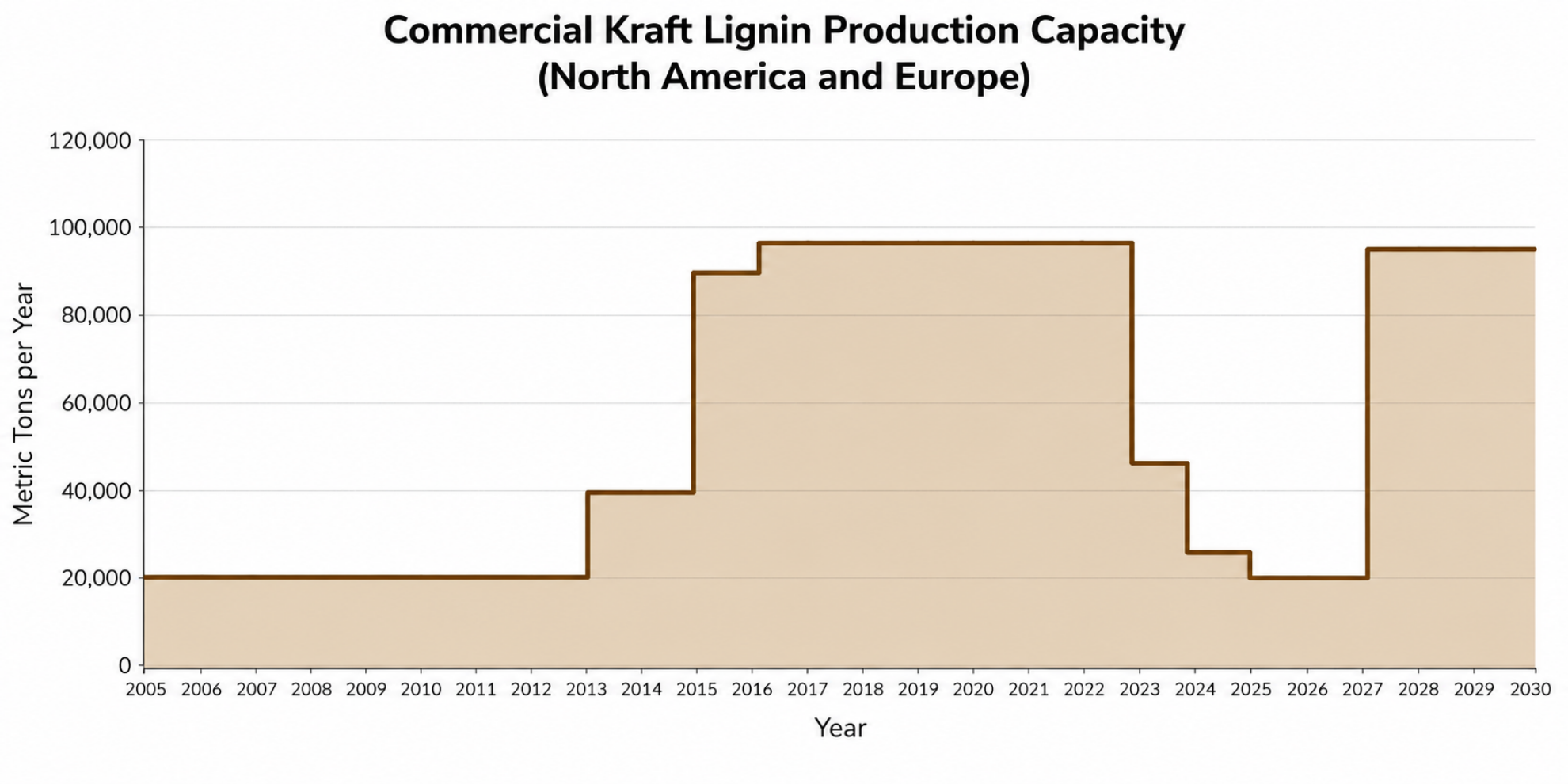
Figure 1. Commercial kraft lignin production capacity in North America and Europe.
As the chart illustrates, commercial kraft lignin production capacity in North America and Europe has been volatile over the last decade, the result of several mill closures. With new capacity expected to come online in 2027, available capacity is projected to increase dramatically. Given its magnitude, it represents a fundamental shift on the supply side of the kraft lignin market.
This should be great news for our industry. Greater availability can provide kraft lignin customers with confidence in long-term supply. For kraft pulp producers, a larger and more diverse customer base can improve the long-term economics of lignin recovery. However, if significant new volumes enter a market that cannot support the economics of commercial lignin recovery, prices could come under substantial pressure. We have seen this before.
Prior to 2023, kraft lignin was often sold at price levels that, in my view, did not adequately reflect the cost of production. If future market prices return to those levels, individual pulp producers may eventually conclude that lignin recovery no longer provides an adequate economic return. That would be a poor outcome for everyone, even if some customers benefit temporarily from lower prices. For many reasons, the solution is not to artificially restrict supply or try to maintain a particular market price. The solution is market development. Increased supply needs to be accompanied by increased demand. This creates an important opportunity for both sides of the market.
That alignment does not, and cannot, require industry-wide coordination. It requires individual producers and consumers to recognize that the long-term value of kraft lignin depends upon building commercially sustainable applications and supply relationships. REMEMBER – kraft lignin is not a waste product.
The challenge we face in 2027 is not whether the industry can produce enough kraft lignin. The challenge is whether the market develops enough valuable applications to support the kraft lignin it can produce. How successfully the industry answers that question could determine kraft lignin's commercial future for years to come.
WDM
